
Production
Homeowners judge your production by what they see and feel on installation day, especially clear communication, a clean site, and someone visibly in charge.
In 2026, top-performing roofers run production like an operating system with tight schedules, consistent updates, and visible quality checks that build trust in real time.
What the data says
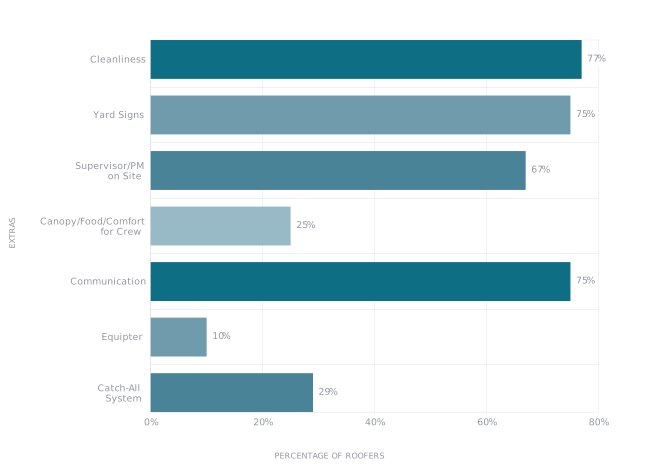
- On-site accountability: 67% have a supervisor or project manager on-site.
- Clean, branded job sites: 77% of roofers enforce cleanliness standards and 75% use yard signs, which both correlate with higher homeowner trust.
- Communication cadence: Most projects include 7–12 customer touchpoints, matching homeowner expectations for proactive updates.
- Tooling gaps: CRM (79%) and estimating (63%) tools are common, but scheduling (38%) and project management (33%) lag behind—the very areas that shape customer perception.
- Crew care: Only 21% of roofing businesses provide shade, water, or meals, even though crew comfort ties directly to faster, cleaner installs.
Production earns trust when it’s predictable, visible, and tidy. A supervisor on site signals professionalism, automation keeps jobs on schedule, and consistent communication ensures homeowners never feel left in the dark. The best contractors treat every yard like a showroom and every project like proof of their reliability.
Time from Lead to Final Invoice
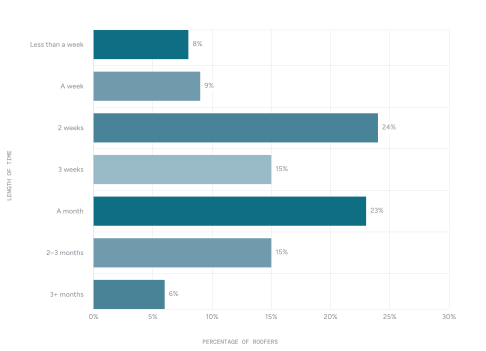
How long does it take to go from lead to final invoice (sent after the job is complete)?
Takeaway
Most roofing companies complete jobs within 2–4 weeks, with 80% closing inside that window. Delays typically stem from weather, materials, or permits, not execution. Predictability here signals professionalism.
How to Nail It
- Set the completion window clearly in proposals: “Estimated completion: 2–4 weeks, weather permitting.”
- Trigger scheduling, permits, and material orders automatically once the customer signs.
- Invoice at job completion with an online payment link and 3-, 7-, and 14-day automated reminders for faster collections.
Production Day
What do you do on production day to stand out from the competition?
Takeaway
Roofers prioritize visible professionalism on install day: clean sites (77%), yard signs (75%), and on-site supervision (67%) lead the list. However, crew comfort and job site technology remain underutilized opportunities.
How to Nail It
- Assign a visible supervisor or PM for every install.
- Use cleanup checklists with before-and-after photos to prove quality and protect reviews.
- Add simple crew comfort upgrades like shade, water, and rest breaks to boost morale and workmanship.
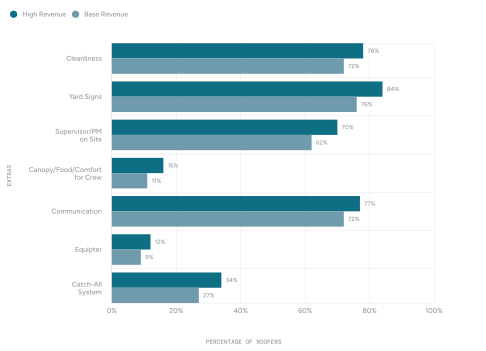
What do you do on production day to stand out from the competition?
Takeaway
Top-earning companies treat every job as marketing in motion. Yard signs (84%), cleanliness (78%), and visible supervision (70%) dominate on the job site.
How to Nail It
- Make every job site a branded, spotless billboard for your company.
- Assign a job lead or PM to own day-of coordination and homeowner updates.
- Require end-of-day cleanup photos before marking a job complete.
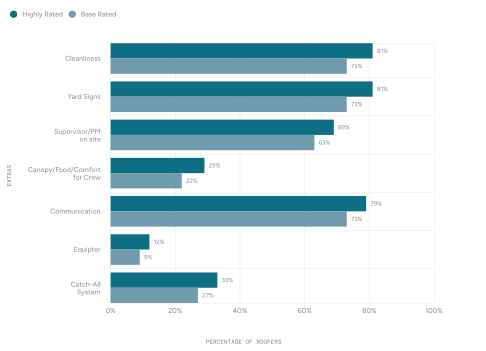
What do you do on production day to stand out from the competition?
Takeaway
Five-star roofers win with visibility and polish. They’re more likely to have the trifecta of trust: supervisors on site (69%), yard signs visible (81%), and clean job sites (81%).
How to Nail It
- Pair cleanliness with consistent branding on signs, uniforms, and trucks.
- Close each project with a photo-verified cleanup checklist to lock in review quality.
What do you do on production day to stand out from the competition?
Takeaway
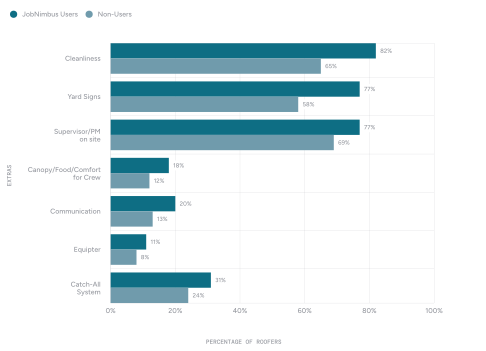
JobNimbus users outperform peers on cleanliness (82% vs. 65%), supervision (77% vs. 69%), and branding (77% vs. 58%).
How to Nail It
- Build a PM-on-site workflow with JobNimbus for accountability and photo uploads.
- Standardize cleanup checklists inside a CRM so every job follows the same standard.
- Use automations to trigger production tasks and notifications once a job is approved.
The Guild Collective: Crafting Clean, Consistent, and Connected Roofing
Daily Software Tools
How many software tools does your company use on a daily basis?

Takeaway
Most roofing contractors rely on 2–3 core tools (61%), not sprawling software suites. A lean, well-connected tech stack consistently outperforms tool overload.
How to Nail It
- Consolidate your workflow around three key pieces of software: a CRM, estimating software, and accounting software.
- Assign a “tech owner” on your team to manage adoption, training, and app cleanup.
- Reassess annually. Get rid of what you don’t need or aren’t using.
Roofing Tech Stack
What types of software does your roofing company use?
Takeaway
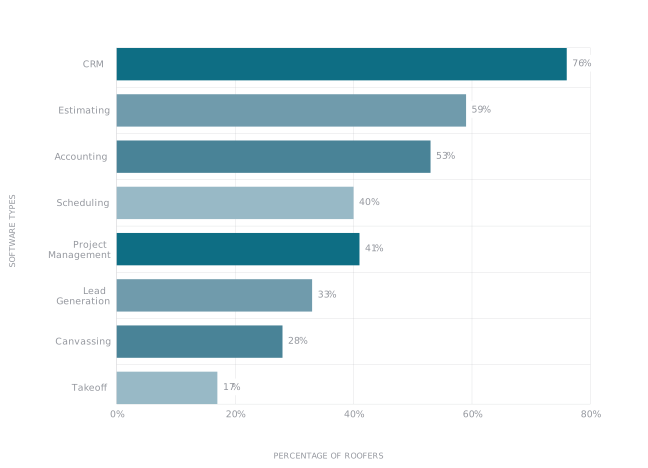
The average roofing company’s backbone is a CRM (76%) and estimating (59%) software, with accounting (53%) close behind. As more contractors connect their systems, the next leap in efficiency will come from adopting scheduling (40%) and project-management (41%) tools that unify crews, office, and customers.
How to Nail It
- Integrate your CRM, estimating, and accounting platforms for a single source of truth.
- Add or expand scheduling and project management tools to smooth handoffs.
- Keep your tech stack lean, connected, and reviewed yearly to prevent bloat.
What types of software does your roofing company use?
Takeaway
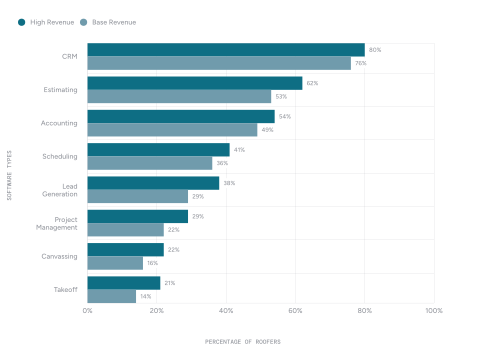
High-revenue roofers rely on a CRM (80%) and estimating (62%) software to drive growth but still underutilize scheduling (41%) and project management (29%) tools. Their next performance leap will come from tighter coordination and connected systems, not just more leads.
How to Nail It
- Connect a CRM, estimating, and accounting systems for unified job flows and reporting.
- Invest in scheduling and project management tools to scale field coordination in tandem with revenue.
- Review and optimize your tech stack quarterly to ensure every tool supports efficiency and growth.
Homeowner Perspective:
Production Edition
For homeowners, production is where promises meet reality. They’re watching how your company shows care in their work. Workmanship tops the list of what homeowners notice most, but communication and cleanliness shape how they feel about the work long after it’s done.
Make the installation process feel as professional as the finished roof. Send timely progress updates, automate them when possible, and keep the job site spotless. Lead with transparency by sharing photos, explaining materials and warranties, and taking time for a final walkthrough. When your crew works with pride and respect, homeowners see quality in every detail.
What Homeowners Worry About Most
What are your biggest concerns when undertaking a roofing project?
Takeaway
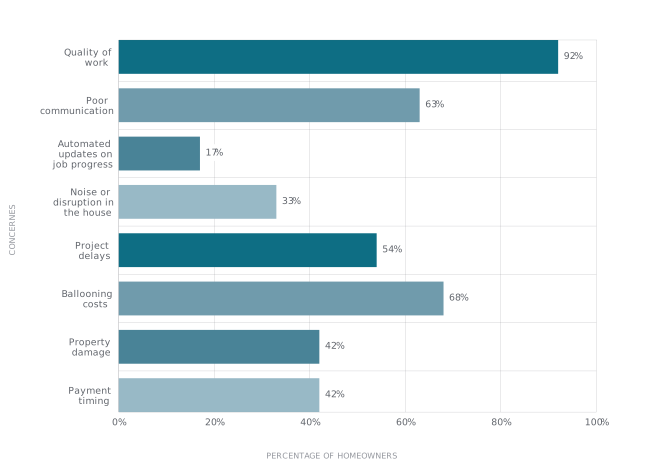
Homeowners care most about quality (92%) and communication (63%). Another 17% specifically cite automated progress updates as a key expectation. Professionalism now includes proactive transparency, not just craftsmanship.
How to Nail It
- Send proactive updates at key milestones (arrival, mid-day, and completion) so customers never wonder what’s happening.
- Automate progress texts or emails through your CRM for consistency.
- Reinforce transparency by sharing photos, cleanup confirmations, and inspection notes.
AI Perspective:
Production Edition
AI is becoming the crew member every roofing company wishes they had since it never calls in sick, loses track of a job, or forgets to follow up. In production, its real power lies in removing friction by streamlining the messy parts of scheduling, communication, and cleanup. Tapping into the power of AI, project managers can stay ahead while crews focus on execution.
Weather-Aware Scheduling
Every roofer knows the weather can turn a great week into chaos. AI scheduling tools are changing that story. By combining local weather APIs with CRM calendars, these systems can automatically predict delays, reshuffle jobs, and even text updated start dates to homeowners and suppliers.
Contractors in volatile climates are already using “rain buffers” built into AI-driven schedules to keep timelines realistic and customers informed.
Visual Quality & Cleanup Audits
A messy yard or missed flashing detail can undo an otherwise perfect job. That’s where AI photo analysis is stepping in.
Crews can now upload end-of-job photos through a mobile app, and AI instantly flags debris, uneven lines, or incomplete work before anyone leaves the site. Once the system determines that everything looks clean and complete, it can even send homeowners a “Final Inspection Passed” message, complete with visuals that boost trust and satisfaction.
Predictive Materials & Crew Planning
Forecasting labor and material needs used to rely on gut feeling and experience. Now, AI can learn from your own job history to predict exactly what you’ll need for a job weeks in advance.
By connecting purchasing data to your CRM, AI can recommend reorders automatically and alert PMs before shortages cause delays. The smartest systems even pre-build crew assignments two weeks out to cut out waste, idle time, and last-minute scrambles.
Automated Homeowner Updates
Nobody likes to be left in the dark, especially homeowners waiting for a roof replacement. AI can now handle routine communication with a personal touch. Daily updates, milestone messages, photo reports, and closeout packets can all be automatically generated and delivered through your CRM or chat platform.
The best-performing contractors use friendly, human-sounding templates with photos and warranty links, so homeowners feel informed every step of the way.
The Bottom Line
AI in roofing production removes avoidable chaos. When scheduling, updates, and documentation run automatically, project managers can focus on leadership and problem-solving instead of chasing paperwork. For forward-thinking roofers, new KPIs like “on-time start” and “zero-complaint cleanup” are becoming the true measures of reliability.