
Cash Flow
For contractors, cash flow is oxygen. It keeps crews moving, suppliers confident, and customers calm. Life is better when deposits are clear, payments are simple, and invoices arrive on time. In 2026, leading roofers have consistent deposits, milestone billing, digital checkout, and automated reminders that make collections predictable.
What the data says
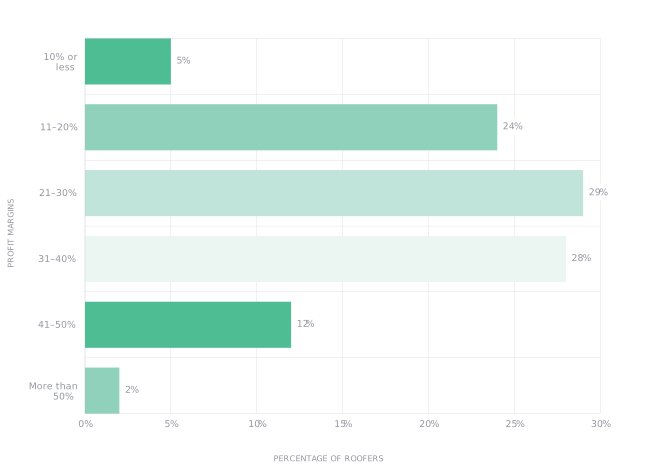
- Gross profit margins stabilize between 21–40%. Over half of roofers land in this range, with 21–30% emerging as the sweet spot where competitiveness and control align.
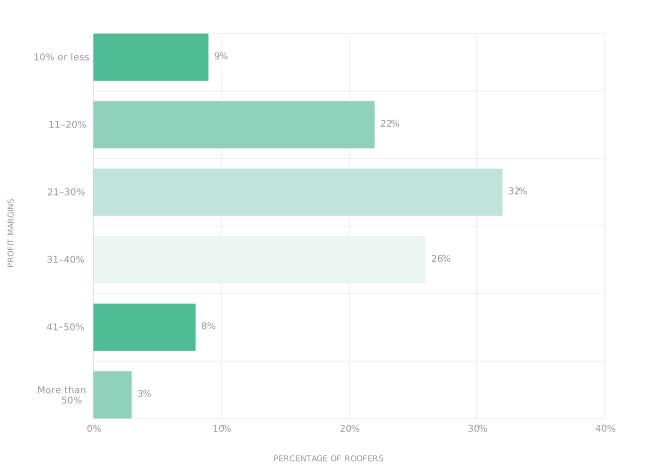
- Net profit margins echo operational health. Most roofing contractors fall between 11–30%, while top performers push past 30% with tighter job costing, better overhead management, and tech-enabled billing.
- Markup confidence grows with experience. Younger companies sit near 22%, while established ones average around 30%, but veterans risk margin erosion when old pricing habits linger.
- Financing boosts job size and collection speed. Most financed projects fall between $13k–$17k, and contractors offering financing earlier in the process see fewer overdue invoices and faster cash flow.
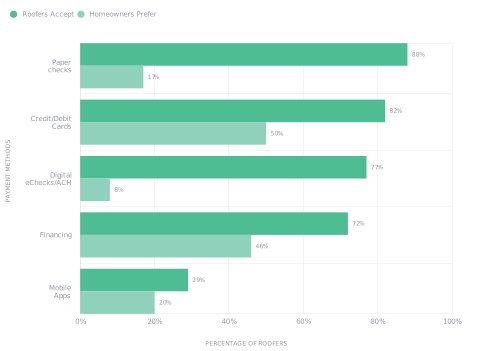
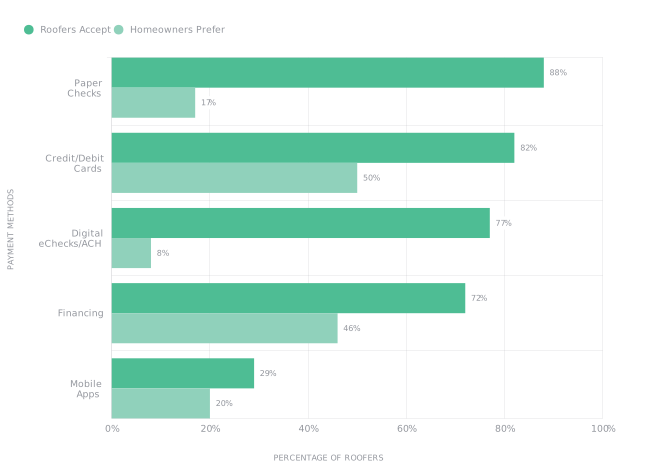
- Payment preferences are shifting. Homeowners increasingly choose credit cards and digital payments, but many roofers still lead with checks—leaving convenience (and faster collection) on the table.
Cash flow improves by design, not by accident. Standardizing deposits, automating reminders, and streamlining payments maintains your margins and professionalism. When customers experience smooth, transparent transactions, they trust you more, pay faster, and refer freely.
Reliable cash flow is financial health, customer confidence, and momentum for growth.
Gross Profit Margins
What is your average gross profit margin per job (after commissions are paid)?
Takeaway
Most roofing companies (57%) land between 21% and 40% gross profit, with 21–30% as the equilibrium between competitiveness and control. Margins below 20% are unstable, especially when material costs spike. Only about 15% of roofers hit over 40%, and they get there through branding strength, disciplined estimating, and real-time pricing visibility.
How to Nail It
- Set a 20% minimum margin floor to protect against inflation and delays.
- Sync estimating tools to live supplier pricing for real-time cost accuracy.
- Audit margins by job type: retail jobs should average more than 30%, and insurance between 20% and 25%.
- Display job-level dashboards so project managers and sales share accountability for profit.
Net Profit Margins
What is your average net profit margin per job?
Takeaway
Net profit reveals how well systems actually work. Most contractors operate with a profit margin between 21% and 30%, striking a balance between growth and overhead. Top performers break 30% by combining automated billing, disciplined job costing, and crystal-clear pricing. The result is that cash arrives quickly and predictably.
How to Nail It
- Target a net profit of more than 20% and safeguard it with tight project controls.
- Review overhead quarterly and scale expenses with actual volume.
- Automate invoicing and reminders to reduce Days Sales Outstanding (DSO).
- Integrate accounting, CRM, and payment tools for full visibility into cash velocity.
Reliable Roofing & Restoration: Growing a Business, Strengthening a Family
Material Markup
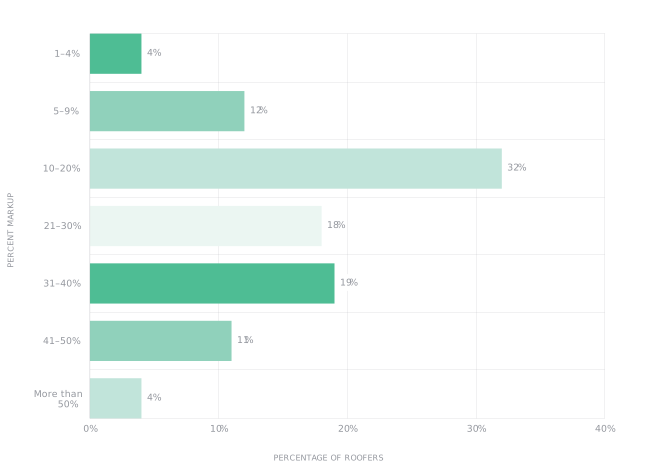
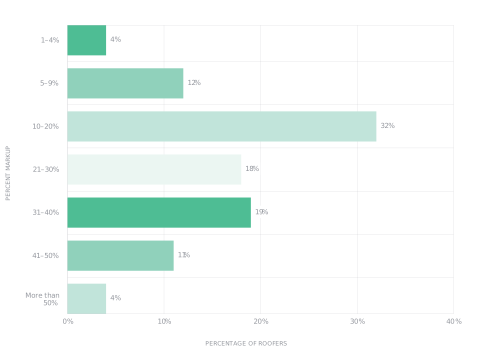
What is your average markup on materials?
Takeaway
Markup determines whether growth produces profit or drains cash. The average roofer marks up 21–30%, but 31–40% is realistic when upgrades and communication justify the premium. Real-time supplier pricing turns uncertainty into control and confidence into cash.
How to Nail It
- Use fixed markup categories:
- Standard shingles/under-layment/accessories = 20–30%
- Upgrades/accessories = 30–40%
- Custom metal/low-volume/special-order = 35–50% or more
- Small parts/consumables = 50% or higher (covers time and warranty trips)
- Update price lists weekly or link estimating tools to supplier APIs for accurate pricing.
- Add price-change clauses to safeguard long jobs.
- Train sales reps to explain the “why” behind pricing, not just the number.
Payment Preferences
Which payment methods do you accept, and for homeowners,
how would you prefer to pay for your next roofing project?
Takeaway
Roofers are catching up to homeowner expectations, but a gap remains. Homeowners increasingly prefer digital, card-based, or financed payments, while many contractors still lead with checks. Financing and credit cards are deal closers.
How to Nail It
- Match your payment options to homeowner behavior, especially on mobile.
- Lead with cards and financing; they drive bigger jobs and faster closes.
- Keep checks available as a payment option, but don’t lead with them.
- Train your sales team to say, “We accept cards, ACH, or financing. Whatever’s easiest for you.”
- Use your CRM or payment tool to track method adoption and time-to-pay.
Financing’s Impact on Past-Due Invoices
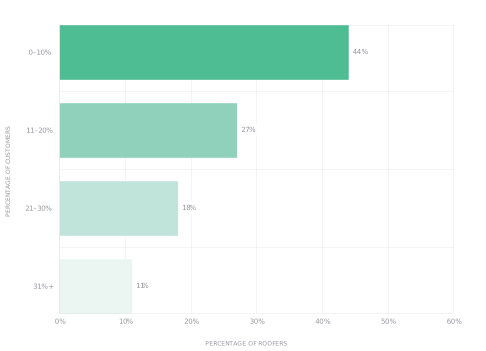
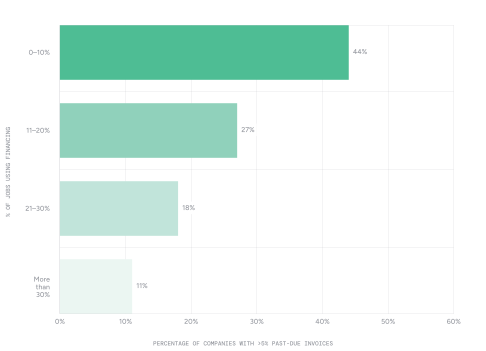
What percentage of your customers are past due on their invoices?
Takeaway
Roofing companies with higher financing adoption report significantly fewer past-due invoices. As financing becomes a standard part of the payment process, contractors reduce collection risk and stabilize cash flow by removing homeowner payment friction before work begins.
How to Nail It
- Present financing as a default option, not a last resort, especially on larger jobs.
- Use financing to protect cash flow, not just to improve close rates.
- Track past-due invoices as financing adoption increases to validate impact on collections.
Beyond the Numbers: How Roofers Build Financial Resilience
Financing Amounts
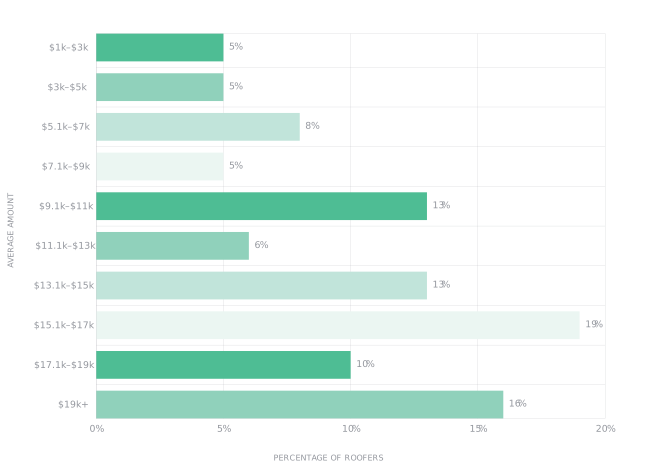
What's the average amount your customers are financing?
Takeaway
Most financed roofing jobs fall between $13k and $17k, aligning with a full roof replacement. About 16% of jobs exceed $19k, proving that flexible payment plans encourage homeowners to choose upgrades and premium materials. Smaller financed projects ($5k–$10k) often cover repairs or partial replacements.
How to Nail It
- Train your team to introduce financing early.
- Analyze financing data to compare job sizes and identify upsell trends.
- Bundle high-value upgrades because customers paying monthly are more likely to say yes.
Homeowner Perspective:
Cash Flow Edition
Money conversations make or break trust. For homeowners, price creates tension, but uncertainty around the price is even worse. Will the finished project be worth the price? Will it require any additional costs once we start? When updates go silent or costs shift without explanation, confidence collapses fast. The best contractors keep financial communication as open as the project itself.
Transparency, proactive updates, and digital convenience turn payments into a seamless part of the homeowner experience. From precise estimates to confirmed receipts, you’ll see how to replace anxiety with assurance.
AI Perspective:
Production Edition
AI forecasts dips before they hit, automates invoicing and reminders, converts payment data into decisions, and pressure-tests pricing so margin holds under real-world costs. Used well, it shortens DSO, stabilizes working capital, and lets owners focus on growth rather than chasing balances.
Predictive Cash-Flow Forecasting
The days of guessing when cash will tighten are over. By connecting your CRM, payments, and accounting tools, AI can project inflows and outflows 30–90 days before they happen. Roofers who use predictive forecasting avoid surprise shortfalls, plan material buys strategically, and time promotions to shoulder seasons, which cuts cash crunches by 25–35%. It’s the difference between reacting to bills and designing your financial rhythm.
To make it work, sync your CRM with QuickBooks or another accounting system for a single source of truth. Set alerts for under-30-day dips or spikes in accounts payable, and review a rolling 13-week forecast every month. Assign clear ownership to every action so insights become outcomes.
Smart Invoicing & Collections Automation
AI-driven invoicing has become one of the fastest ways to strengthen cash flow. Instead of manually sending invoices and reminders, AI builds them directly from job statuses, embeds payment links, and sends reminders automatically. Teams using this approach see payments arrive up to twice as fast and reduce past-due balances by roughly 30%. Nothing slips through the cracks, and customers always have a frictionless way to pay.
A best practice is to:
- Auto-generate invoices within 24 hours of job completion.
- Schedule reminders at 3, 7, 14, and 21 days.
- Include card, ACH, or financing options in every invoice.
Profit Analysis & Pricing Simulation
Roofing margins are too tight to rely on intuition. AI profit analyzers now model supplier changes, crew costs, and markup options before you quote. These analyzers help keep margin variance under control, even when prices fluctuate during a project. Roofers using simulations improve per-job margin accuracy by 8–12%, ensuring that profitability is planned.
To stay ahead, link estimating tools to supplier pricing feeds and refresh them each week. Establish guardrails for gross profit floors and markups by category, and trigger alerts when cost swings threaten those thresholds. It’s proactive profit protection built into your estimating workflow.
Predictive Financing & Payment Behavior
AI is also revolutionizing the way contractors think about homeowner payments. By analyzing payment histories, job sizes, and customer risk, it can predict which accounts are likely to pay late and recommend where to offer financing or early-pay incentives. Roofing contractors who proactively surface payment options—especially on jobs over $10,000—reduce overdue accounts by up to 40% and often see average ticket sizes increase.
To implement this, sync your CRM with a financing partner and embed pay-over-time options directly into proposals. Auto-prompt financing for large quotes or higher-risk profiles, then review financed versus cash performance each quarter. It’s a smarter way to balance customer affordability with business liquidity.
The Bottom Line
AI won’t run your books, but it can help them. Forecast earlier, invoice faster, follow up automatically, and offer financing before cash becomes a problem. The payoff is predictable cash, protected margins, and a customer experience that feels effortless. When your cash flow is steady, your company can stop balancing checkbooks and fully focus on building.