Team & Culture
Roofing has always been about hard work. But in 2026, it’s just as much about people work. The future of roofing depends on how well companies attract, develop, and retain their teams in addition to how fast they build roofs.
Crews are harder to find, expectations are higher, and growth is moving faster than the workforce can keep up. Private equity, automation, and consolidation are rewriting what it means to scale company culture.
What the data says
- 36% of roofing companies operate with five or fewer full-time employees.
- Two-thirds of roofers maintain a turnover rate under 5%, but some lose a quarter of their team members each year.
- 9 in 10 roofers say finding skilled labor is their biggest challenge.
- Top performers invest in structured onboarding, leadership training, and culture-fit hiring to create stable, motivated teams.
The roofing companies thriving in 2026 are building businesses of belonging. They lead with empathy, clarity, and purpose, creating workplaces where people want to stay and customers feel the difference. When a culture has systems in place for growth, recognition, and respect, teams stay longer, communication runs more smoothly, and performance becomes truly sustainable.
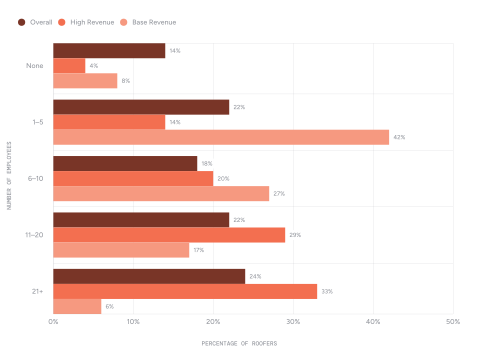
Team Size
How many employees do you have, not including your 1099 contractors?
Takeaway
Most roofing companies run lean. Thirty-six percent of roofing businesses operate with five or fewer full-time employees, while 33% of high-revenue companies employ more than 20. But more people doesn’t always mean more progress. Without clear roles, large teams lose efficiency. In fact, small, cross-trained crews often outperform bigger, churning ones.
How to Nail It
- Hire to fix bottlenecks. Think project managers, coordinators, and deal setters/closers.
- Cross-train for peak season flexibility.
Track throughput and quality per full-time employee. - Fix retention before expansion. Growth without stability just enhances the chaos.
Leading Beyond the Ladder
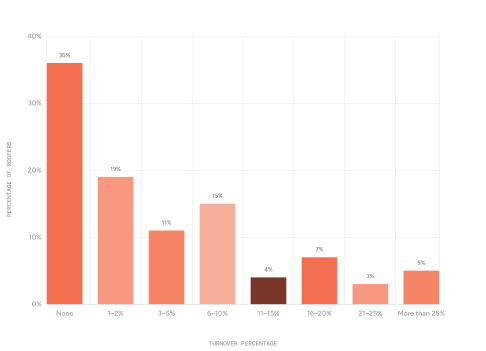
Workforce Turnover by Year
What percentage of your workforce quit or were fired from your company this year?
Takeaway
Turnover is rising. Two-thirds (66%) of roofing companies maintain a churn rate of 5% or less. In comparison, 5% of roofing companies lose more than a fourth of their employees each year—the top causes being poaching, burnout, limited career paths, and culture shock during consolidation. Without visible growth or recovery plans, crews often leave after a single season.
How to Nail It
- Show career ladders and tie certifications to raises.
- Balance output with rest. Use seasonal “stay bonuses” to help retain key workers.
- Schedule weekly check-ins and recognition loops.
- During mergers or acquisitions, anchor values before introducing new systems.
Roofer Chicks: Branding Boldly, Building Better
Homeowner Perspective:
Team & Culture Edition
Long before the first shingle goes on, homeowners notice tone, respect, and professionalism. A courteous crew and clear communication signal as much about your company as the finished roof itself.
Strong teams create confident customers. When every handoff from estimate to invoice feels seamless, homeowners sense alignment behind the scenes. Regular training on people skills, consistent follow-through, and genuine recognition for incredible customer interactions all build trust that extends beyond the roofline. The companies that homeowners remember most couple their skill with kindness and organization.
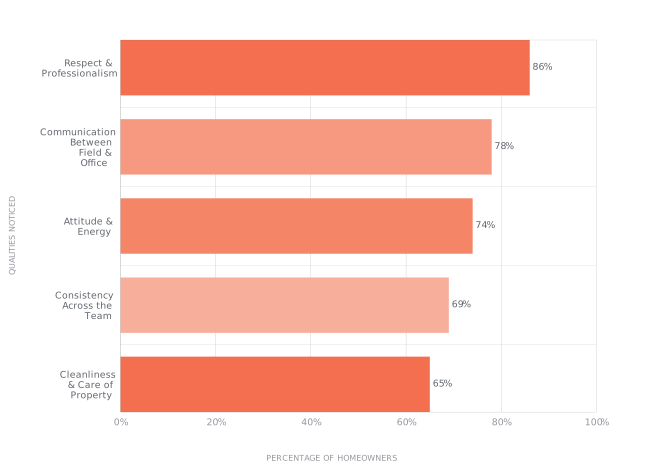
How Homeowners Read Culture
What do you notice most about roofing teams?
Takeaway
Homeowners read culture from the curb. Respect, communication, and attitude speak volumes about your company and your culture. Craftsmanship matters, but culture earns five-star reviews.
How to Nail It
- Train people skills monthly on tone, expectations, and conflict.
- Standardize handoffs in your CRM from estimate to invoice.
- Recognize customer praise, not just output or production.
- Walk jobs for courtesy and organization, not just technical quality.
- Hire for attitude and train the rest.
AI Perspective:
Team & Culture Edition
For years, culture lived in slogans and meetings. In 2026, it’s showing up in data. From onboarding and performance to burnout prevention, AI gives leaders real-time visibility into how their teams actually operate. The best companies are using AI to support their people by removing bias, spotting friction early on, and making growth measurable across every role.
Performance Insights
Great leaders know how their teams are performing through hard numbers. AI dashboards now surface patterns that used to hide in spreadsheets, like crew productivity, response delays, review tone, and follow-up gaps. Rather than fueling micromanagement, this clarity empowers coaching that’s fair, specific, and timely.
To make it work, connect your CRM, HR, and scheduling data for unified team visibility. Don’t wait to review performance dashboards with managers on a quarterly basis. Talk through it with them once a week. Use AI to recognize trends and spark conversations, not accusations. Tracking leading indicators like response time and communication rate helps leaders coach employees before problems show up in reviews.
Smarter Onboarding & Training
The “one-size-fits-all” training model is giving way to something far more effective. AI-generated learning paths adapt to each employee’s skill level and pace, getting new hires up to speed faster while keeping veterans challenged without burning them out. It’s personalized growth at scale.
Leaders can build adaptive training modules that adjust difficulty as users progress, then use that performance data to assign micro-courses that close skill gaps. Keep momentum high by publicly recognizing and rewarding completions. AI may guide the training, but human mentorship makes it meaningful.
Communication Consistency
In any roofing business, how your team communicates is how your company is perceived. AI can now analyze tone, timing, and response patterns across both customer and internal interactions, revealing where professionalism or empathy may be slipping. The goal is to protect your brand voice and coach with facts instead of feelings.
Use AI tools to summarize team communications for tone and timing trends, and then share anonymized examples as learning moments. Integrate those insights into regular coaching sessions, and align tone analysis with your company values so that “how we say it” becomes part of “how we win it.”
Predictive Workforce Planning
Burnout doesn’t appear overnight. It builds quietly, hidden under deadlines and weather delays. AI can now blend job timelines, weather data, and workload history to help managers forecast staffing needs, spot fatigue risks, and balance assignments before issues arise.
By combining scheduling, time logs, and project data, leaders can identify overbooked or underutilized teams early. Predictive alerts can trigger proactive conversations about rest or reassignment, while transparent planning builds a sense of fairness rather than favoritism.
The Bottom Line
AI is becoming a resonance chamber. If your team communicates, learns, and grows with transparency, AI will amplify that. If your systems are chaotic or unclear, AI will make that visible too.
Used wisely, AI creates alignment between leadership and field, performance and people, and company goals and personal growth. The best roofing leaders in 2026 will use AI to track progress, celebrate improvement trends, and inspire their teams.
The strongest cultures this year are tapping into tech to make trust measurable, development intentional, and culture tangible.