
Services
Roofing companies are no longer just “roofing companies.” Homeowners now expect a full-service partner. They want a single business to handle their biggest exterior needs, from gutters to solar. Diversification is a growth strategy that enables roofers to secure more jobs, earn higher margins, and keep customers for longer.
What the data says
- Volume sets the pace. Companies completing the most roofs share one common trait: deeply systematized operations. High volume follows strong processes, not larger crews alone.
- Most roofers now offer a core set of exterior add-ons, while growth-focused companies layer in premium, seasonal, and efficiency-driven services. This widening gap shows a maturing industry where differentiation comes from expertise.
- Homeowners want fewer handoffs and more accountability. Most replacements happen after damage, but interest in energy efficiency and solar is climbing, creating new upsell opportunities for bundled exterior upgrades.
Homeowners value seamlessness from estimate to cleanup, so the more of the process you own, the stronger your reputation becomes. Contractors who evolve into one-stop exterior partners are expanding services and trust.
Roof Sales & Installs
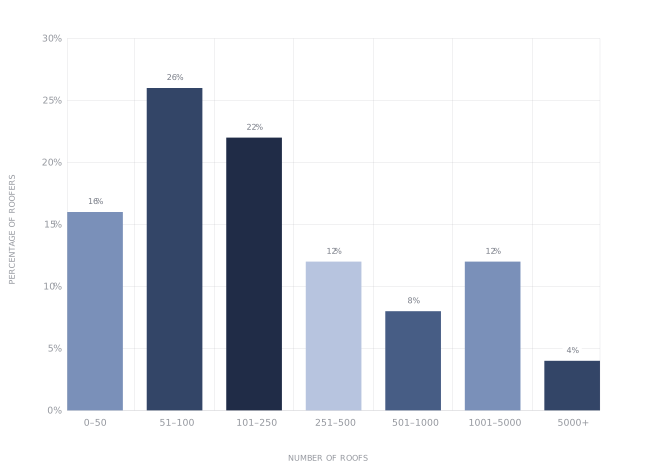
How many roofs do you sell and/or install per year?
Takeaway
The top 24% of roofing companies complete more than 500 roofs annually, while 65% of high-revenue companies handle 250+ roofs annually.
How to Nail It
- To break the 500-roof ceiling, you need systematized processes.
- Use a CRM with automation capabilities to manage jobs efficiently and maintain quality at higher volumes.
- Track production timelines and bottlenecks to optimize your workflow.
- Establish repeatable systems for lead intake, scheduling, and crew management to prevent growth-related chaos.
Secondary Services That Win
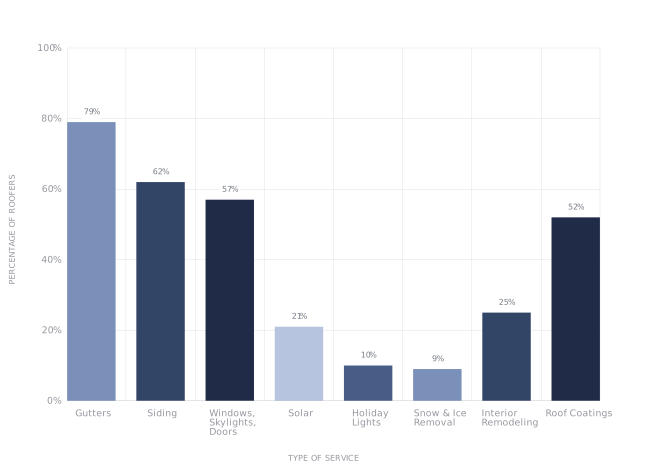
What other services do you provide beyond roofing?
Takeaway
Roofers aren’t stopping at shingles. Gutters (79%), siding (62%), and windows/skylights/doors (57%) dominate as the top add-ons. Roof coatings (46%), interior remodeling (23%), and solar (27%) are gaining traction. Even holiday lights (10%) and snow & ice removal (9%) show roofers expanding into year-round revenue opportunities.
How to Nail It
- Prebuild three bundles in your CRM: Roof Only, Roof and Gutters, Roof and Gutters and Windows/Skylights, with Good/Better/Best pricing.
- Add inspection triggers like photos and checkboxes for gutters, skylights, and attic ventilation to drive consistent cross-sells.
- Track KPIs weekly, such as attach rate by service, margin per add-on, and incremental revenue per job, and show them on a job-level dashboard.
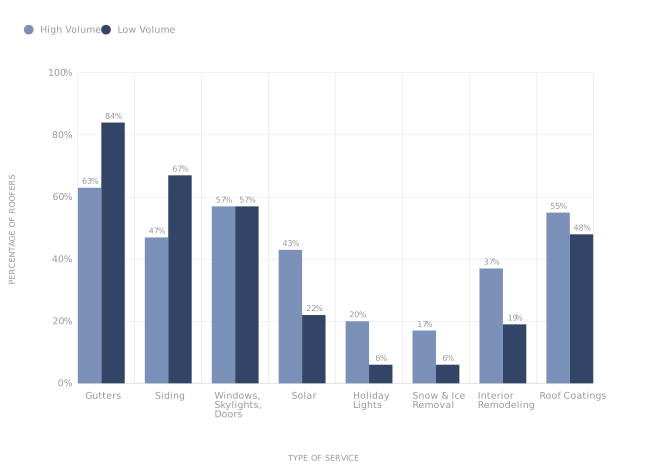
What other services do you provide beyond roofing?
Takeaway
High-volume roofers focus on premium and seasonal add-ons like solar (43% vs. 22%), holiday lights (20% vs. 6%), snow and ice removal (17% vs. 6%), and interior remodeling (37% vs. 19%). They’re less likely to handle commodity trades such as gutters (63% vs. 84%) or siding (47% vs. 67%).
How to Nail It
- Pilot solar in one market with transparent pricing and timelines.
- Use a seasonal calendar: coatings in spring, lights in late fall, and snow and ice in winter.
- Keep a small specialty crew for non-roof work so installs stay on schedule.
- Lean on trusted partners for gutters and siding when your schedule is packed.
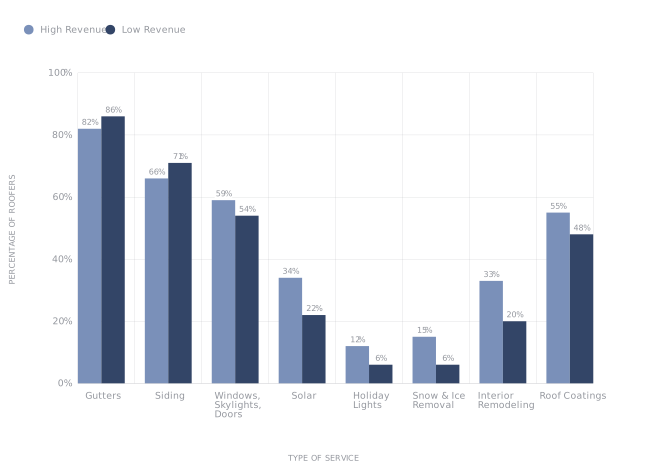
What other services do you provide beyond roofing?
Takeaway
High-revenue roofers grow margins through diversification. They lead in solar (34% vs. 22%), interior remodeling (33% vs. 20%), roof coatings (55% vs. 48%), and winter services like snow & ice removal (15% vs. 6%) and holiday lights (12% vs. 6%).
How to Nail It
- Bundle complementary upgrades (roof and gutters or roof and solar) in every estimate.
- Offer monthly payment options for larger add-ons to increase acceptance.
- Add simple prompts: replace skylights every 10+ years; add ventilation/coatings for low airflow.
- Run post-install check-ins with targeted offers to turn one job into two.
Homeowner Perspective:
Services Edition
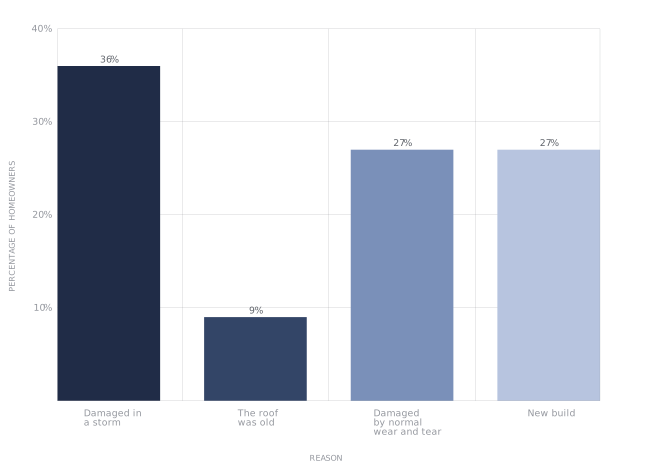
Homeowners rarely replace a roof because they want to. It’s almost always because they have to. Most replacements stem from storm damage or normal wear, not proactive upgrades. Yet the conversation is changing. More homeowners are starting to view their roofs as part of a broader home system that impacts comfort, efficiency, and long-term value.
In online reviews and forums, homeowners frequently mention how they wish they’d added insulation, ventilation, or solar while the roof was open. The regret isn’t about the roof itself but the missed opportunity. As awareness around energy efficiency grows, more buyers want their next roof to protect and perform.
For roofers, that shift represents untapped potential. Homeowners are looking for one trusted partner who can handle everything above the gutters, not a series of separate specialists. Roofing companies that expand into solar, insulation, or gutter upgrades are building customer loyalty before the next storm ever hits.
Homeowner Replacement Reason
Why did you get your roof replaced?
Takeaway
Most homeowners replace their roofs reactively, not proactively. However, the rising interest in efficiency and solar energy shows that expectations are changing fast.
How to Nail It
- Offer upgrades at a moment of urgency, like insulation, ventilation, solar, or during roof replacement.
- Bundle related services like gutters or attic improvements to create a complete solution.
- Educate homeowners on how proactive upgrades protect against future costs.
- Market the whole system, not just the shingle. Position your company as a one-stop exterior expert.
AI Perspective:
Services Edition
The most successful contractors are evolving into full-service exterior partners managing roofs, gutters, solar, siding, and more through unified systems.
AI is accelerating this shift by providing roofers with operational control and forecasting capabilities, enabling them to expand their offerings without complicating matters. With AI, roofing companies can scale from local specialists to trusted, end-to-end service brands.
Intelligent Service Expansion
AI transforms diversification from a gamble to a strategy. By analyzing job history, customer feedback, and market demand, AI tools can identify which new services (like coatings, solar, or gutter bundles) are most profitable in your region. Instead of guessing what to add next, contractors can see exactly where expansion will pay off.
Roofers who pair data-driven service planning with strong CRM systems are scaling past 200 roofs a year with confidence.
AI-Driven Estimating & Bundling
Bundled services win more jobs, and AI is making them easier to price, pitch, and sell. Estimating tools now pull real-time supplier pricing and labor data to build accurate roof-and-gutter or roof-and-solar packages in seconds.
This automation gives homeowners transparent options and helps contractors protect their margins, even as material costs fluctuate. The result is faster quotes, cleaner proposals, and higher close rates on multi-service jobs.
Smart Scheduling & Workflow Automation
Running multiple service lines adds complexity, but AI keeps it under control. Smart scheduling platforms now optimize crews across gutters, siding, and roofing, reshuffling automatically when weather or materials delay a job.
With everything synced to a CRM, project managers can see every moving part in one place. That visibility means more roofs installed, more upsells completed, and fewer costly overlaps.
Predictive Maintenance & Retention
Once a roof is installed, the next opportunity begins. AI helps contractors predict when a building will need gutters, coatings, or ventilation upgrades so you can turn past customers into recurring revenue. Automated reminders, warranty checks, and maintenance alerts help roofers stay top of mind long after installation.
For homeowners, it feels like next-level service, but for contractors, it’s a retention engine that runs on autopilot.
Customer Experience at Scale
As roofing companies evolve into exterior service brands, maintaining a personal touch gets harder. AI bridges that gap.
Automated updates, smart photo reporting, and reputation tools ensure that every customer gets clear communication and consistent follow-up, no matter how many services you offer. The more seamless your digital experience, from first estimate to final cleanup, the more your brand earns lasting trust.
The Bottom Line
AI is transforming roofing from a one-trade set-up into a multi-service business model. It helps contractors know which services to add, how to price them, and how to deliver them efficiently without adding complexity.
Roofing companies that use AI to connect their operations are growing faster, selling smarter, and becoming the exterior partners homeowners already expect them to be.