Sales
Sales is where interest becomes income and where trust is most fragile. Homeowners may find you online or through a referral, but how you sell determines whether they sign. In 2026, that means more transparency.
What the data says
- Profit-based pay is rising. Top-rated contractors are more likely to tie commissions to margins, not just volume.
- Roofers who layer SPIFF incentives for behaviors like follow-up and same-day proposals close up to 22% more jobs than those relying on commission alone.
- Nearly two-thirds of contractors offer tiered Good/Better/Best estimates, yet only about 30% of homeowners choose the highest package.
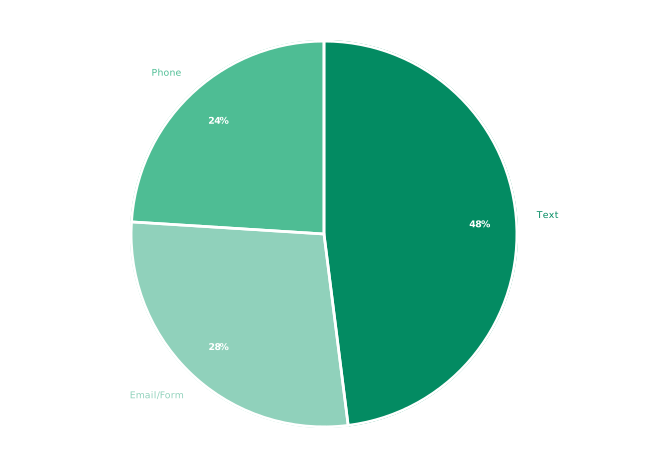
- Texting remains king: 48% of homeowners prefer text over phone or email for scheduling and follow-ups, and companies using AI to automate those touchpoints are closing faster than ever.
Roofing sales is about aligning compensation, proposals, and upgrades with what homeowners actually want: trust, clarity, and choices.
Sales Team Size
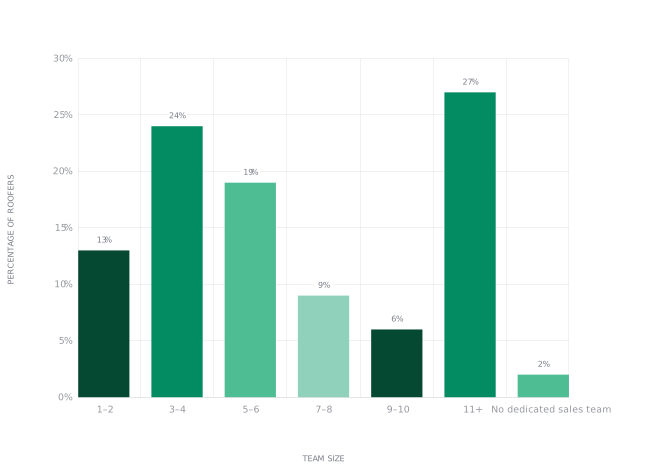
How many people do you have on your sales team?
Takeaway
Most roofing sales teams run lean, with four or fewer reps. Larger teams typically emerge only once a company reaches higher revenue or a heavier insurance volume. For smaller operations, efficiency and structure matter more than headcount.
How to Nail It
- Train small teams for efficiency. Standardize your process and follow-up cadence.
- Use a CRM to automate lead tracking, task reminders, and performance reporting.
- Once you have 5–10 reps, add a dedicated sales manager to maintain accountability and prevent chaos.
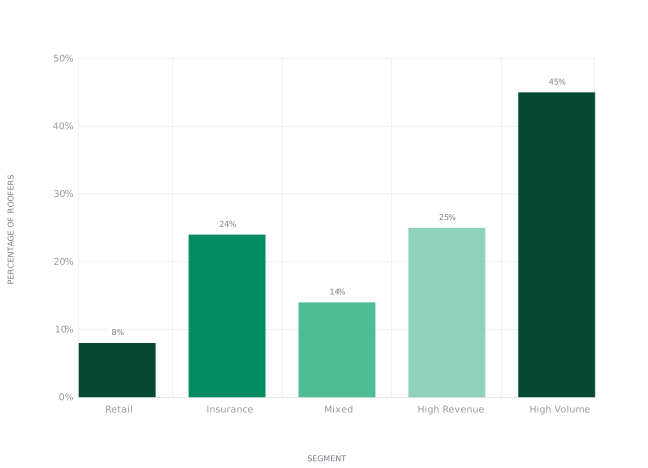
How many people do you have on your sales team?
Takeaway
Large sales teams concentrate in insurance-only and high-volume companies where role specialization drives speed and consistency. As teams scale, structure determines performance.
How to Nail It
- Split roles between insurance and retail reps to sharpen focus and shorten sales cycles.
- Train frontline managers to coach consistency and quality across the team.
- Hold weekly pipeline reviews to align priorities, forecast accurately, and catch stalls early.
Sales Salaries
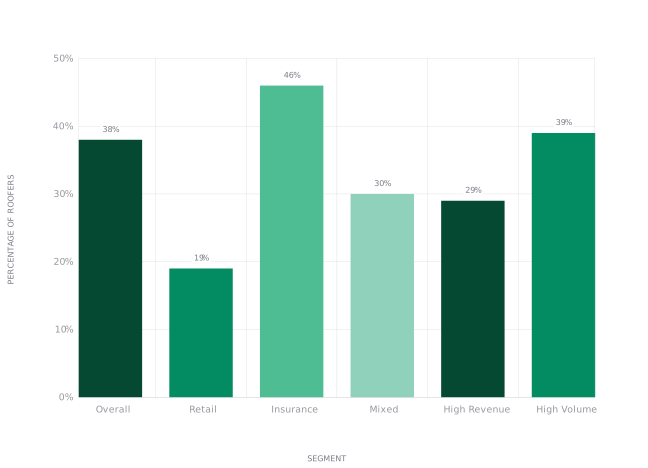
What is the average salary for your sales team?
Takeaway
Commission-only pay dominates in insurance-focused and high-volume companies, but that can lead to turnover if unmanaged. It can drive short-term hustle but hurts long-term stability without income smoothing.
How to Nail It
- Add a small base or SPIFFs to stabilize income and reduce turnover.
- Offer draws or advances to smooth cash flow for commission-only reps.
- Include profit kickers to keep reps focused on quality jobs.
What is the average salary for your sales team?
Takeaway
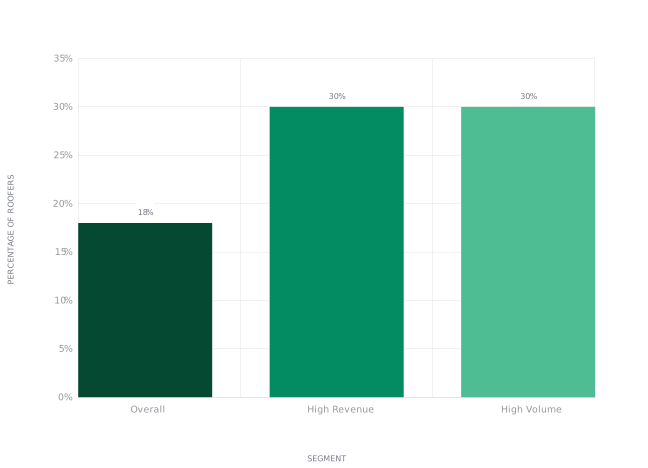
High-revenue and high-volume roofing companies often pay top-end salaries, attracting experienced closers who can handle complex sales cycles.
How to Nail It
- Build a compensation ladder with clear steps from $75k to over $100k.
- Tie accelerators to hitting both quota and profit goals.
- Publish your comp plan internally so reps know how to advance.
What is the average salary for your sales team?
Takeaway
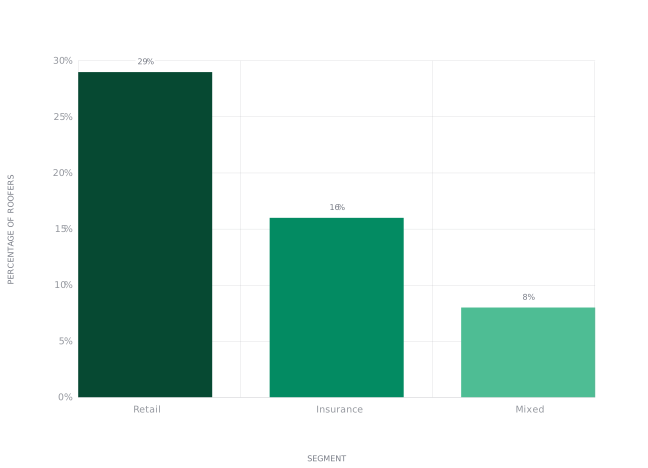
Retail-only companies dominate in the $75k–$99k sales salary range.
How to Nail It
- Price for top talent who can upsell “Better” and “Best” tiers in your estimates.
- For insurance roofing companies, add a base pay plus profit bonuses for accurate documentation and margin control.
Sales Commissions
What is your base sales commission rate?
Takeaway
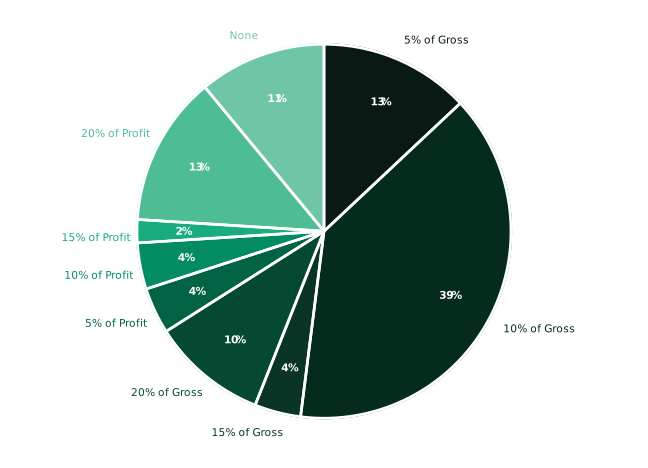
Commission rates in roofing sales are all over the map, but 10% of gross sales dominates as the industry standard, with nearly 4 in 10 roofers using it. A smaller segment rewards profit-based commissions—most commonly 20% of profit—to motivate smarter selling and protect margins. The rest pay little or no commission at all, leaving money (and motivation) on the table.
How to Nail It
- Anchor your plan around a clear, motivating commission rate. 10% of gross or 20% of profit are the most common sweet spots.
- Tie commissions to profit if you want reps focused on margin, not just volume.
- Layer in bonuses for upsells or high customer ratings to balance speed with service.
- Re-evaluate rates yearly to stay competitive as material and labor costs shift.
What is your base sales commission rate?
Takeaway
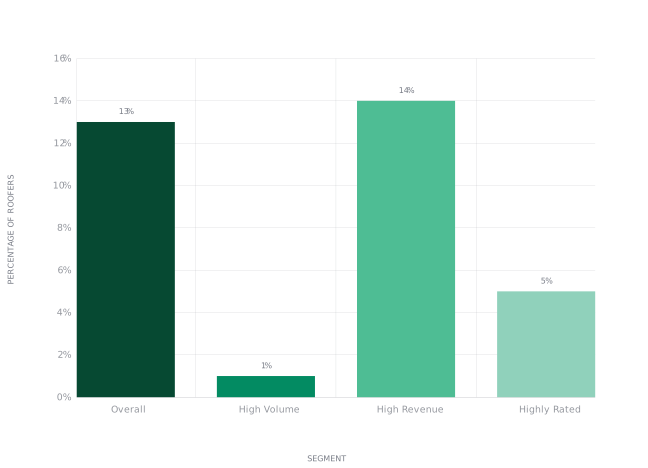
High-revenue roof companies often use profit-based commissions of 20%, aligning sales behavior with higher-margin jobs and better-quality outcomes.
How to Nail It
- If you adopt a profit-based pay system, teach margin management. Give reps visibility into costs, upgrade menus, and pricing guardrails so they can actually influence profit.
- Consider a hybrid model of 6–8% gross plus a 2–3% profit bonus for jobs that exceed target margins.
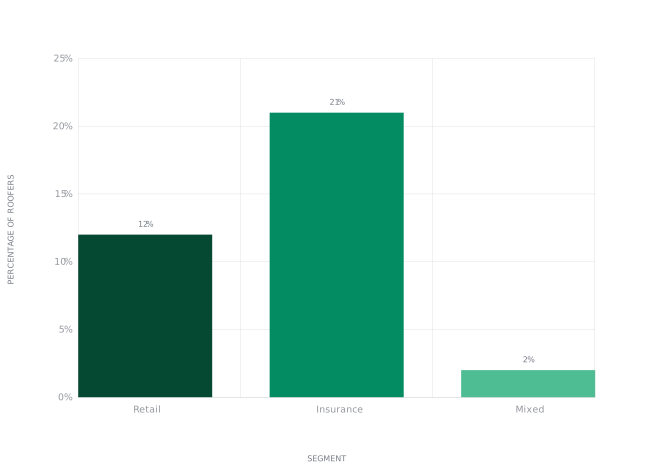
What is your base sales commission rate?
Takeaway
Insurance-only roofing companies are far more likely to use aggressive profit-based commission structures, while retail companies adopt them selectively and mixed-model businesses rarely use them at all.
How to Nail It
- Insurance-only companies: Profit-based commissions work best here. Double down on clean supplements, tight documentation, and accurate job costing.
- Retail-only companies: Use profit-based pay selectively on high-margin jobs, but keep gross-based commissions as your primary structure.
- Mixed companies: Avoid a single commission model. Separate compensation by job type to prevent profit tracking from becoming a bottleneck.
SPIFF Playbook: How to Boost Roofing Sales
When Commissions Are Paid
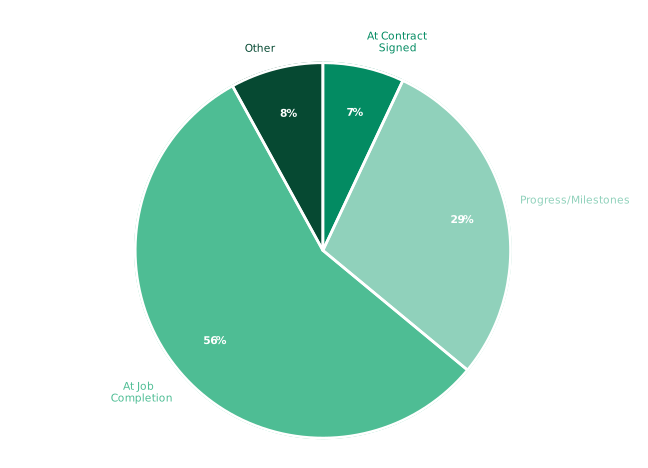
How do you pay commissions?
Takeaway
Most roofing companies wait to pay commissions until the job is completed, reinforcing a strong industry preference for tying compensation to finished work. However, nearly one-third use milestone-based payouts, signaling a growing middle ground between cash-flow protection and sales motivation.
How to Nail It
- Anchor commissions to job completion to protect margins and reduce clawbacks.
- Use milestone-based payouts (materials ordered or production start) to improve sales cash flow without overexposing the business.
- Avoid paying full commissions at contract signing unless job scope, pricing, and delivery are tightly controlled.
Leads per Sales Rep
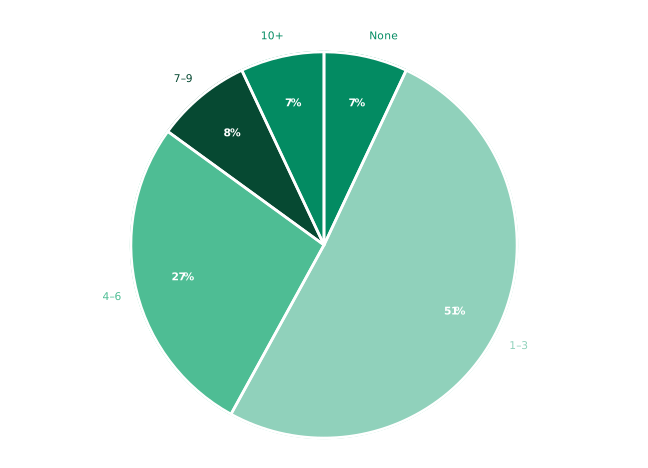
On average, how many leads do each of your salespeople bring in per week?
Takeaway
Most reps generate only 1–3 leads per week, but top performers double that.
How to Nail It
- Set a baseline of 4–6 leads per week for every rep.
- Use canvassing tools, referral prompts, and automated follow-ups to fill the pipeline.
- Track and reward consistent lead activity, not just closed deals.
Salespeople Generating 4+ Leads per Week
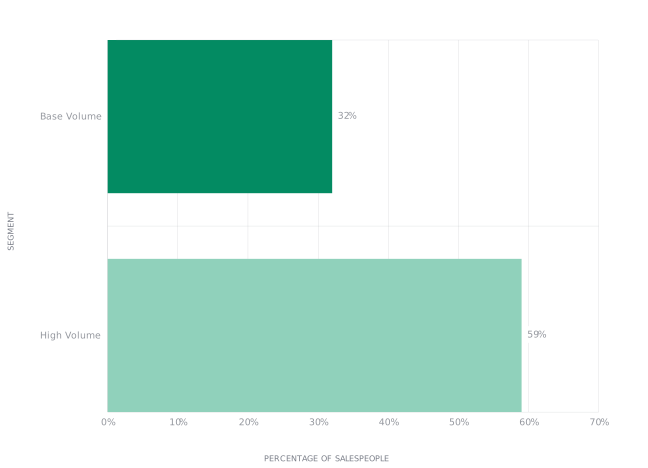
On average, how many leads do each of your salespeople bring in per week?
Takeaway
High-volume companies are nearly twice as likely to have reps generating four or more leads per week. The difference lies in structure. Consistent prospecting systems outperform one-off efforts every time.
How to Nail It
- Standardize a daily prospecting routine, including door-to-door visits, referral follow-ups, and post-installation canvassing.
- Give each rep a defined territory list and talk track to reduce overlap and boost accountability.
- Run a “4+ Club” SPIFF that rewards reps who hit weekly lead goals.
Quota Attainment
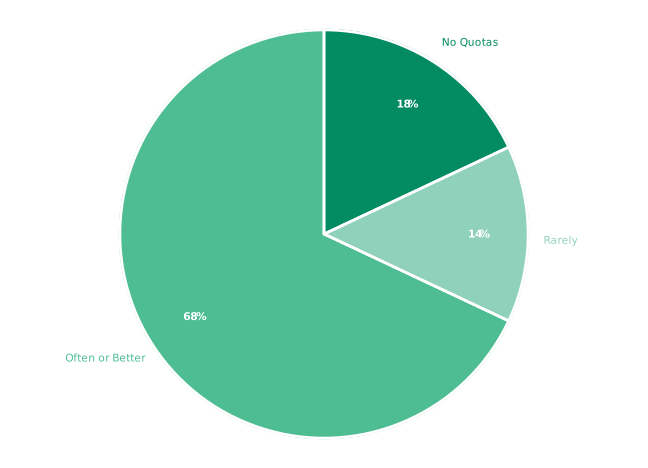
How often do your sales reps hit their quota?
Takeaway
Roughly 1 in 5 roofing companies don’t set sales quotas. Teams with clear targets outperform on both revenue and predictability. Quotas drive success.
How to Nail It
- Implement SMART quotas for every rep.
- Track leading indicators like proposals sent, follow-ups made, and closed jobs.
- Tie accelerators to meeting both revenue and margin goals to achieve growth and profitability.
Proposal Delivery Methods
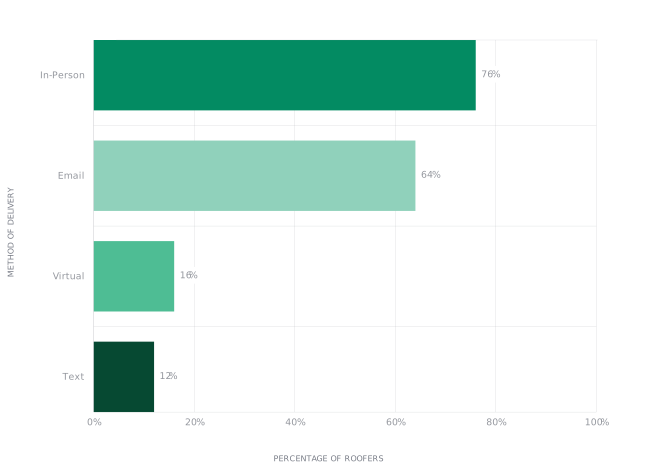
How do you provide proposals to customers for review?
Takeaway
Dual proposal delivery (presenting live and emailing the same day) correlates with higher close rates. When homeowners see and review the proposal twice, clarity increases, objections decrease, and follow-ups convert faster.
How to Nail It
- Present every proposal live, then send a digital copy the same day.
- Auto-schedule a 48–72-hour follow-up via calendar and text.
- Reward same-day dual delivery as a SPIFF-worthy behavior.
Good/Better/Best Estimate Adoption
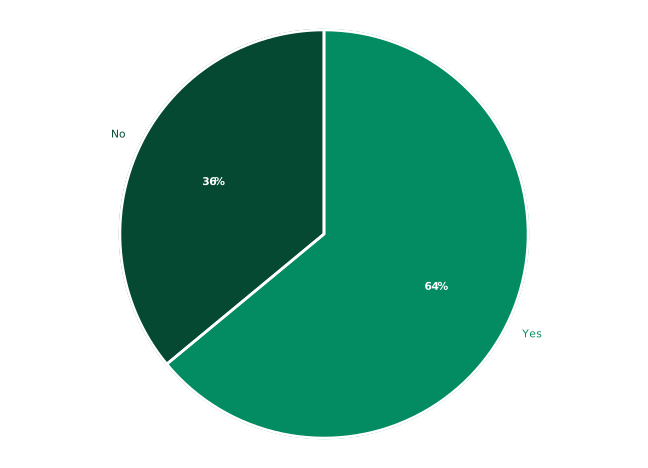
Do you offer good, better, best options in your estimates?
Takeaway
1 in 3 contractors still present only a single price. Multi-option proposals not only increase close rates but also lift average job value.
How to Nail It
- Standardize Good/Better/Best templates and make them part of every proposal.
- Display financing beside each tier to make upgrades feel attainable.
- Train reps to walk customers through the tiers with visuals. Showing differences helps build perceived value.
“Best” Option Selection
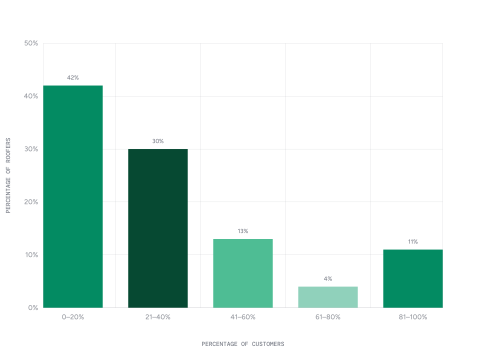
What percentage of your customers choose the "best" or highest-priced option?
Takeaway
Half of roofers see up to 30% of their customers choose the “Best” option. The right framing can lift that rate without extra pressure.
How to Nail It
- Lead with “Better” as your default, then anchor “Best” as the high-value, worry-free upgrade.
- Rename tiers to emphasize outcomes (e.g., Performance/Premium/Elite) instead of price.
- Always display monthly payments beside total price to make the “Best” tier feel more achievable.
Best-in-Class Estimating Process
Step 1: Capture & Qualify
- Respond to every lead in under 5 minutes.
- Confirm job basics.
Step 2: Measure & Document
- Order aerial or drone measurements.
- Photograph roof issues, the attic, and exterior.
- Create a 3D model or annotated sketch.
Step 3: Build the Proposal
- Offer Good/Better/Best options
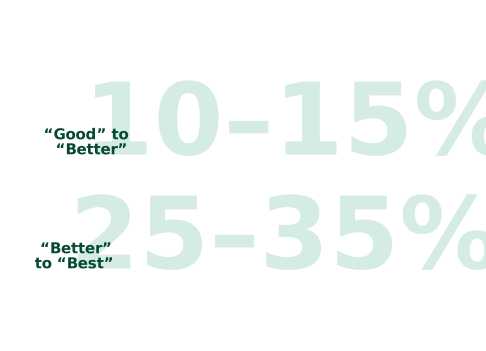
- Show 10–15% and 25–35% tier jumps.
- Include side-by-side financing
- Add visuals: photos, product samples, and warranties.
Step 4: Deliver & Explain
- Present live and email the same day.
- Focus on benefits, not specs.
- Set a clear timeline and payment expectations.
Step 5: Follow Up & Close
- Auto-schedule 2 follow-ups within 72 hours.
- Call 15 minutes after proposal opened.
- Track conversions and Best-tier wins.
Price Spread Between Tiers
What is the percentage difference between your Good, Better, and Best options?
Takeaway
Most contractors show only a 13% gap between tiers. That gap is too narrow to demonstrate meaningful value. Wider spreads help customers see the difference, not just the dollars.
How to Nail It
- Bundle visible upgrades like ventilation, accessories, and warranties in higher tiers.
- Lock minimum price spreads into your proposal tool for consistency across sales reps.
Homeowner Perspective:
Sales Edition
Sales starts before the first conversation. Homeowners respond to transparency: when price ranges are visible, they’re far more likely to reach out, and simple financing cues (“from $/mo”) lower the friction even more. They want clear guardrails—what typically costs what, why prices vary, and an easy path to an exact quote—so the decision feels informed, not risky.
Convenience closes the gap from interest to action. Most homeowners prefer to book by text, expect one-tap confirmations, and appreciate reminder messages that respect their time. And once they approve, they’re looking for momentum. Most customers expect work to begin within one to three weeks. The strongest sales experiences set that start window up front, send onboarding steps immediately, and even offer a priority-start option during peak season to turn urgency into value.
Preferred Scheduling Method
What is your preferred method of scheduling a roofer?
Takeaway
Homeowners prefer text (48%) over email or phone for scheduling. Speed and simplicity win.
How to Nail It
- Default to text-based booking and reminders.
- Include one-tap calendar links in every confirmation.
- Send day-before and same-day reminder texts to reduce no-shows.
AI Perspective:
Sales Edition
AI is already changing the roofing sales game. Today’s top performers use it to move faster, communicate clearly, and close more deals without hiring more reps. From the first phone call to the final signature, AI is becoming the unseen sales assistant who never misses a beat. This is how roofers are using AI for sales in 2026.
24/7 Answering & Instant Booking
Missed calls are missed revenue. AI voice and chat tools now step in to catch after-hours or overflow calls, qualify leads, and book appointments directly on your calendar. They ask the right questions (name, address, issue, and preferred contact method) and respond instantly.
For roofers using AI answering systems, that speed is paying off: many report 10–20% more booked appointments simply by closing the response-time gap.
AI-Assisted Measurement & Visuals
Homeowners want to see what they’re buying, not just hear about it. That’s where aerial imagery and AI-generated 3D models shine. They turn roof measurements into vivid visuals that make every proposal faster, clearer, and more professional.
By showing 3D renderings or annotated images during an appointment and embedding them directly in digital proposals, roofers build transparency and trust. According to HOVER, visuals can more than double close rates compared to traditional estimates.
Proposal Auto-Assembly & E-Sign
The best salespeople know momentum is everything. AI-powered proposal tools now auto-pull measurements, photos, and warranty options to assemble digital proposals within 24 hours of an inspection and complete with e-signatures built in.
Smart contractors are locking in consistent tier spreads and profit margins, while including financing options by default. The goal is to make it as effortless as possible for homeowners to say “yes.” For many, that means getting 80% or more of proposals signed electronically.
Automated Follow-Ups
Even the best pitch won’t close the deal if follow-up falls flat. AI keeps the conversation alive automatically by sending helpful reminders, texts, and personalized emails when a proposal is opened but not accepted.
The most effective workflows use a simple three-touch sequence:
- A thank-you and calendar link on day one
- A short value-reminder on day three
- A friendly check-in by day seven
That rhythm keeps interest warm without feeling pushy. Studies show that two or more touchpoints within the first 72 hours can dramatically increase close rates.
The Bottom Line
Roofing sales AI is here to amplify people. It frees reps from the busywork of scheduling, measuring, and manual follow-ups, allowing them to focus on building relationships, problem-solving, and closing sales.
For roofing contractors ready to grow, AI is becoming one of the most reliable closers on the team, never missing a lead.